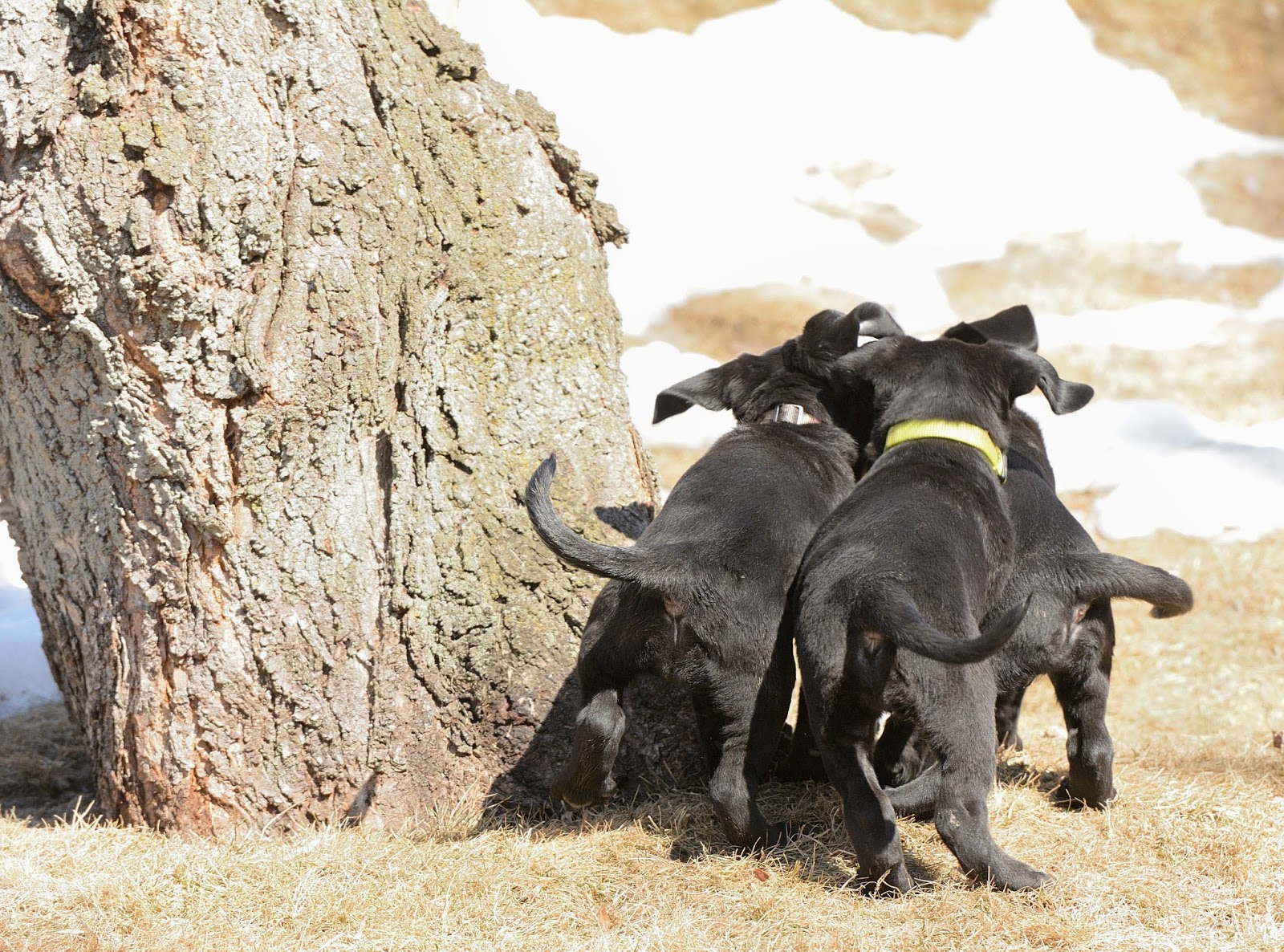
I had the privilege of doing a Puppy Adoption photo shoot for Team Chelsea, a Durham Region community volunteer group that helps pets in need.
Photographing these 7 beauties was so much fun! Happy to report that so far four have found amazing new homes where they are no doubt cherished and spoiled!
This almost never happens to me with Snowy Owls. I was driving through South Whitby on a dreary, rainy and miserable morning wishing hard to see something, anything to photograph when I saw this stunning beauty in a random field in an industrial area.
Not only did I spot him, but he was withing decent range which also almost never happens.
Needless to say, my day went from dreary to amazing!
Watching for prey in the field.
Muddy "Paws"!
Here, the owl is swatting at crows and gulls as they pester him on a roof-top.
I was incredibly lucky to find this Great Horned Owl, who just happened to move into the only sliver of sunlight in the dark forest. WOW. I think my heart stopped. Such incredible beauty.
On a bitterly cold winter evening I caught glimpse of something lying on the ice in a construction lot in South Whitby. I soon realized it was a male Red-Breasted Merganser. He was one of countless waterfowl along the Great Lakes this winter who struggled to survive, no doubt crash landing in this desolate area. These birds need open water to fish and swim, which is scarce this winter with the lakes freezing at a much higher rate than usual.
There was no telling how long he had been there.
After a battle walking through huge snow drifts, I was able to access and contain the bird. I got him warm and comfortable for the night. The next day he was transported to Toronto Wildlife Centre, where he was found to be emaciated, like many of the waterfowl in Durham who were in trouble. But fortunately, no injuries.
"My" Merganser can be seen in this video clip, as he enjoyed his 15 seconds of fame the day he was admitted, in this CBC News Video Clip. He is the first bird shown, eating fish in the clinic.
Several days later he was released with a new friend he made at TWC while in care. These birds were very lucky because they were rescued in time and made full recoveries. It is hard to walk along the shores of Lake Ontario now and see all those that didn't survive this harsh winter.
Thanks as always to Toronto Wildlife Centre for the huge difference they make to wildlife in the GTA (and in my life too!).
Published by Toronto Ornithological Club
and Long Point Bird Observatory
Written by Lise Anglin
For those of you who are birding veterans in Southern Ontario, you may have met Jim Baillie while out in the fields and meadows of our region's birding hotspots. Younger birders might recognize his name through the James L. Baillie Memorial Fund established by Bird Studies Canada, or have perhaps participated in one of the many Baillie Birdathon fundraising events that take place across North America each year.
Growing up, we frequently heard fond references to our "Uncle Jim", an uncle through marriage, on our Grandfather's side. We knew Uncle Jim worked at the ROM doing something exciting with birds (we never really knew what), that he was the one that gave our Grandparents the two bird statues that were always displayed in their living room, and that our parents always spoke of him with great affection.
Fast forward to many years later and I now know that James L. Baillie was a fascinating man who shared my passion for birds (but far surpassed me in the skills department). One of the only things I have in my possession that belonged to my Grandfather (on loan from Mom, and I'm hoping she forgets I have this!) is a book written about Jim Baillie, called "Birder Extraordinaire, The Life and Legacy of James L. Baillie", by Lise Anglin and published by the Toronto Ornithological Club and Long Point Bird Observatory.
It is fascinating to see how much, and how little, has changed in the birding community in the last 50 years.
Many of the birding spots frequented by myself or birding friends today are referenced, including High Park, Mount Forest Cemetery, Ashbridges Bay and Cranberry Marsh (referred to then as LeVay`s Marsh). A Northern Shrike is nicknamed a Butcher Bird (I hadn't heard that reference before); and while bird photography wasn't big back then, there is reference to a debate between "Collectors vs Non Collectors" which reminds me of the ongoing battle between Baiters and those who oppose this practice (myself included). The competitive nature of some birders today existed back then as well.
Perhaps what has changed most is the prevelance, and acceptance, of birding today. I loved this excerpt from the author on Page 23:
"Although birdwatching has gained acceptability as a hobby over the past decade or two, there has long been a certain stereotype of the birdwatcher as a hair-netted spinster in woolens and sensible shoes who probably talks to her plants at night and subsists on Ovaltine. One individual who became keen on birds in the 1940s reported a reaction to the news that he spent his spare time watching birds, as follows, "And he a grown man! Imagine!". Others who have since come out of the closet tell tales of hiding their binoculars much as an alcoholic might hide his desk-drawer bottle, or covering their field guides with the tiel of some best seller".
And I especially loved this journal entry by Jim, from Field Journal 3, April 23, 1922, concerning a walk by the Humber River:
"At this point I laid [sic] down on the grass for a rest and as I watched the glistening blue of the tree swallows as they skimmed over the water and as I listened to the harsh rattle of the kingfisher as it shot passed [sic] me, I was well pleased with life, and did not like to get up and continue my walk".
I'm sure most birders can relate to moments like that.
It's been great flipping through the pages of this book, and I often wish I could go birding with "Uncle Jim" now - I can only imagine what I would learn.
Rumours were rampant that a Cattle Egret was in south Durham Region recently. I struck out the few times I was in the area, and figured it had moved on.
This morning while on the way to take photos I was thrilled to unexpectedly stumble upon it, not too far from where it had been reported.
Unlike Great Egrets, who can be found at many local marshes in late summer, Cattle Egrets spend their time in pastures, often with cattle and sometimes even on top of cattle.
I don't think this one read the memo, choosing instead to hang out under the Golf Simulator sign at our local golf course.
Toronto Wildlife Centre had received many calls over several weeks about a coyote, sick with severe mange in Scarborough - bare, scabbed, and very thin. Despite wearing an MNR radio-collar, this coyote outsmarted the smartest of rescuers and eluded capture for weeks until finally he was caught by the MNR in conjunction with TWC. He was known as the "Scarborough Coyote" in the media, and his progress was followed by many that were concerned about his plight.
After receiving great care for several weeks at TWC's main facility, I was excited to learn that this coyote was being moved to his pre-release location, where I help to care for the animals. This is where animals who are now much healthier become reacclimatized to life in the wild, learning to once again deal with weather change in a more wild setting.
When he first arrived he was frightened and did not emerge from his shelter, but soon he became confident and showed us the formidable animal he is when he's at his best. Beautiful, piercing yellow eyes, and a bold confidence, mixed in with exactly the right amount of skittishness. It was evident that he was ready to go back home.
I was thrilled to be part of the release team.
Excitement mounted as the afternoon wore on. First, he had to be caught up and the tracking collar refastened (he is part of an MNR study, and the collar is set to fall off after a certain number of weeks). This was no easy task as this is a large, strong and smart coyote.
Moving swiftly to get him into his kennel cab
Then, a drive to his release site, which we accessed through the generosity of a nice couple who live within his territory. Finally, that bittersweet moment when the door of the kennel cab opens. After a few seconds of indecision, the coyote determines that life is way better on home turf than with us.
A momentary contemplation...
And then...
I'm outta here!
It was a great release, with an awesome group of people. A big thanks to the couple who allowed us access to their property, and for taking the time to call for help when they saw he needed it.
Here's a great slow-mo video captured by Dan, a member of the release team:
...And a few media links to the Coyote's story. You'd never know by looking at these "before" photos that this is the same animal.